FROM DIGITAL MESH TO STONE MONOLITH: A TECHNICAL PROCESS
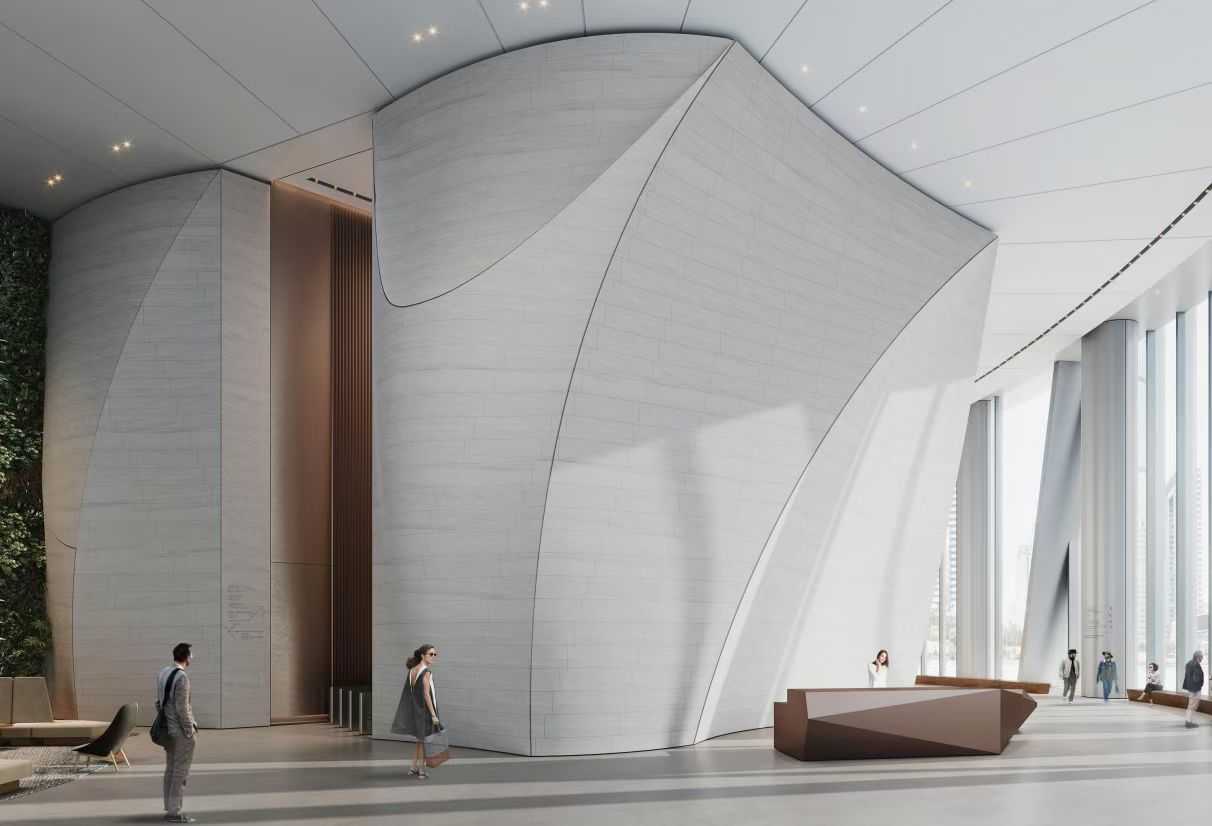
In contemporary architecture, the lobby is no longer just a transitional space; it is a declaration of intent. For this high-profile commercial development, the design intent was paradoxical: to create a sense of softness and movement using one of the earth's most rigid materials. The result is a towering, sinuous feature wall clad entirely in Limestone Grey.
The choice of material was deliberate. Limestone Grey offers a sophisticated, matte aesthetic with a subtle, consistent grain. Unlike high-gloss marbles that reflect light, this limestone absorbs and diffuses it, allowing the form of the architecture to take center stage. The stone provides a tactile, brutalist elegance that anchors the soaring verticality of the atrium.
However, the true triumph of this project lies in its engineering and fabrication. The wall features a complex, parametric curvature—a twisting, organic surface that defies standard masonry.
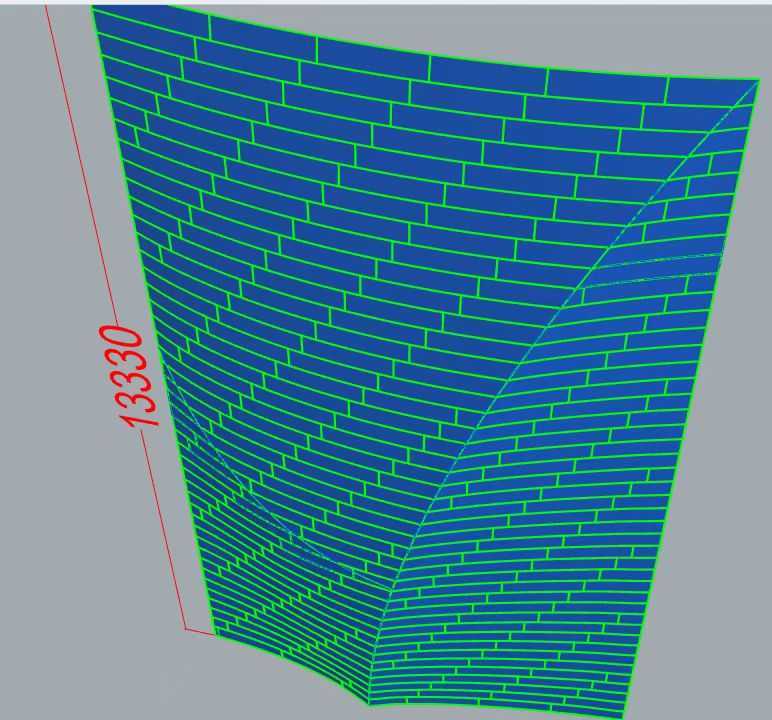
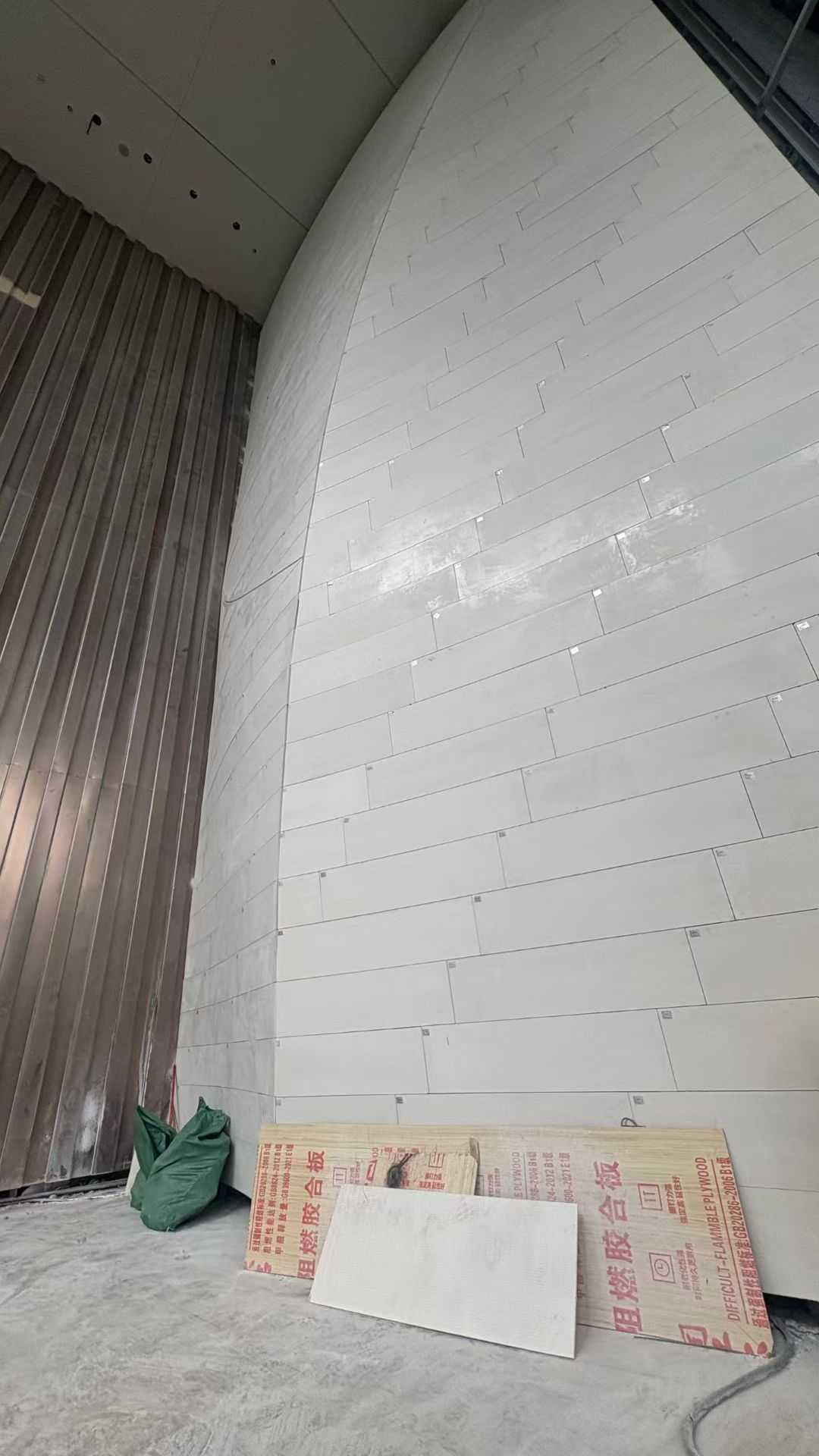
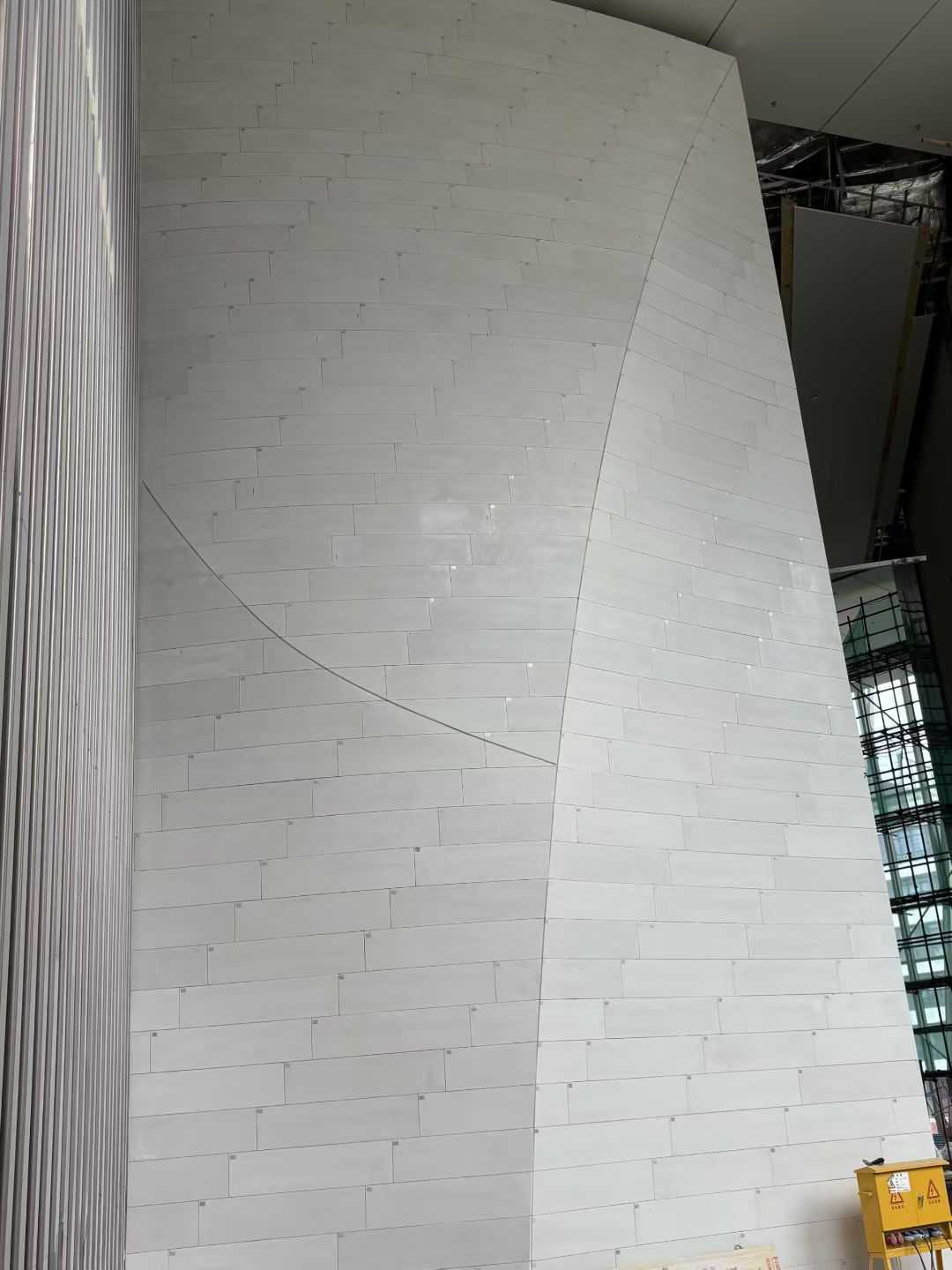
To achieve this fluid shape without using prohibitively expensive solid curved blocks, we utilized a technique of precision segmentation. As seen in the 3D wireframe modeling (Image 3), the surface was tessellated into thousands of individual linear pavers. This "brick-skin" approach allows the stone to wrap around the hyperbolic curves, acting almost like a digital fabric made of stone.
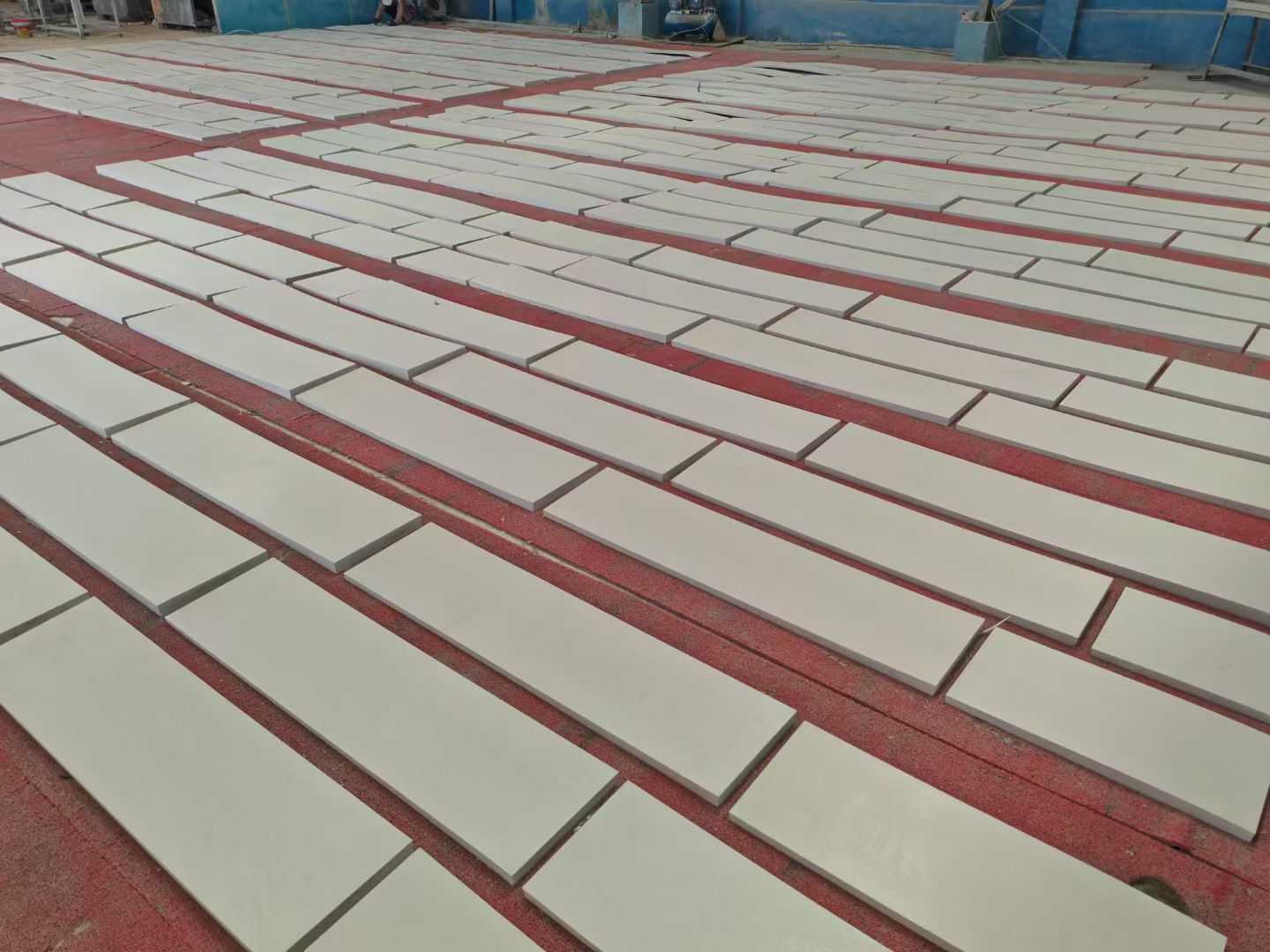
The fabrication process demanded absolute rigor. The factory dry-lay (Image 2) was essential not for pattern matching, but for tonal consistency control, ensuring that the thousands of small Limestone Grey units blended into a cohesive, monolithic gradient rather than a patchwork.
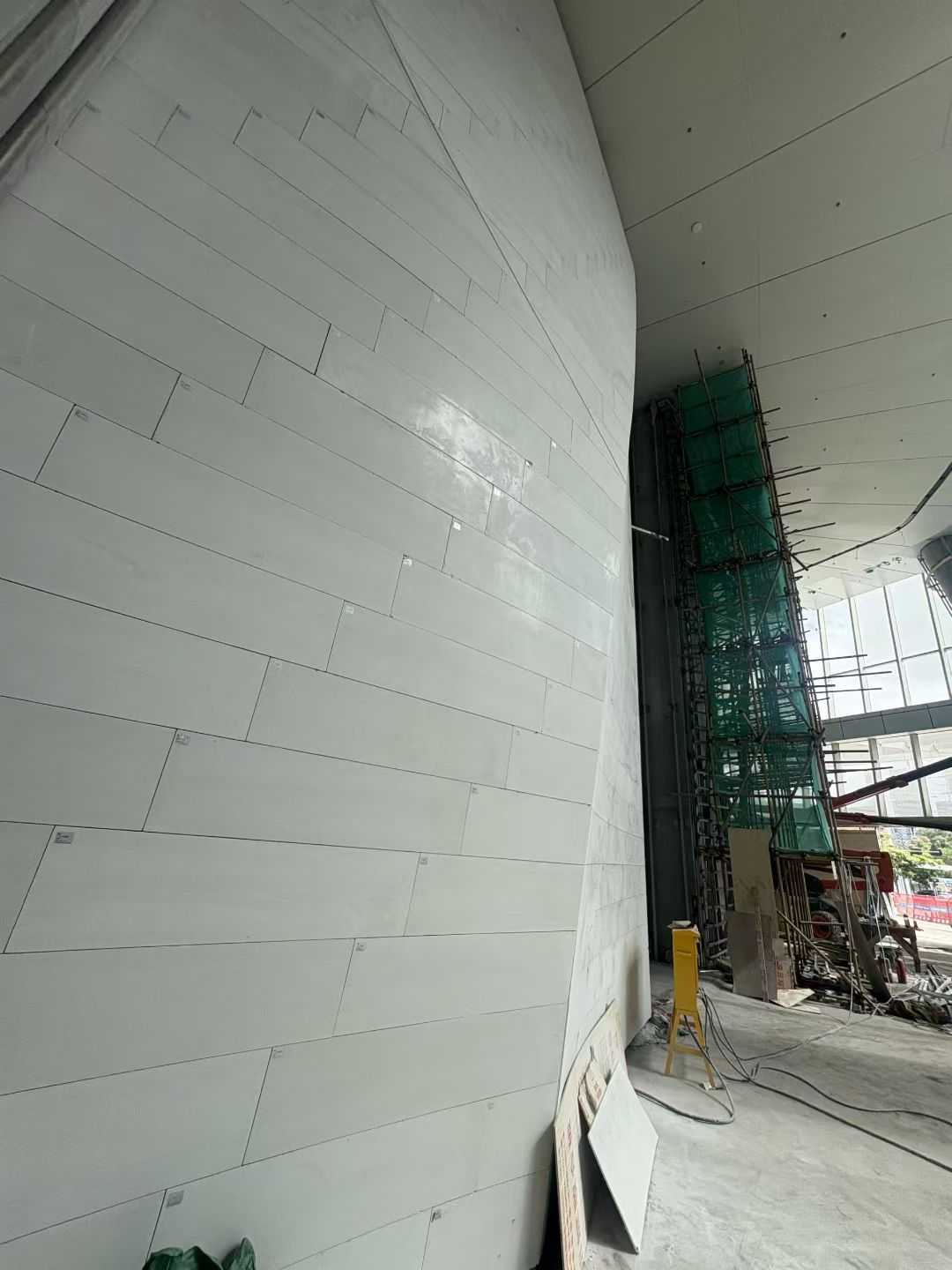
On-site, the installation (Images 1, 5, 6) required a meticulously calibrated substructure. Each course of stone had to follow the complex geometry dictated by the digital model. The result, as visualized in the rendering (Image 4), is a seamless integration of technology and craft—a wall that appears to be in motion, frozen in the timeless solidity of Limestone Grey.